
Best Time of Year for a Western Australia Road Trip
When to visit WA for a road trip by region. Coral Coast, South West, and Esperance seasonal guides with temperature, crowds, and pricing advice.

Dorian Menard
Founder & Owner
Most people think trip planning starts with picking a date.
We have found that in Western Australia, the location dictates the date.
Western Australia covers 2.64 million square kilometres of diverse terrain.
This massive scale means there is never a single “perfect time” for the entire state.
Our team has spent years running 4WD rentals here, and we know that a perfectly timed trip means lower costs and better weather.
A poorly timed one often leads to 45-degree heat or booked-out campsites.
We want to help you avoid those logistical headaches.
Here is the data-backed breakdown of when to travel based on where you want to go.
Perth and Surrounds (Year-Round)
Perth defines the “Mediterranean climate” for Australia with distinct seasonal shifts.
We consider this the most reliable starting point for any itinerary.
The Bureau of Meteorology data shows Perth creates a consistent baseline for travel logistics regardless of the month.
Summer (December to February)
This season brings dry heat and high energy.
We see average maximum temperatures hit 31.6°C in February, which is usually the hottest month.
The famous “Fremantle Doctor” sea breeze consistently arrives in the afternoon to cool things down.
You will find this weather ideal for coastal camping near Lancelin or taking the ferry to Rottnest Island.
Key Summer Considerations:
- Rainfall: extremely low (often less than 15mm combined for the season).
- Events: The Perth Festival typically kicks off in February.
- Gear: You rarely need more than a light sheet for sleeping.
Autumn (March to May)
Our team consistently rates this as the most comfortable time to be in the capital.
Ocean temperatures linger around 22°C well into April, while air temperatures drop to a manageable 25°C average.
The crowds thin out significantly once university and school terms resume in early February.
You can often secure premium campsites at Lane Poole Reserve without fighting for a spot.
Winter (June to August)
This period is wet, cool, and green.
We advise travellers that Perth receives the bulk of its annual rainfall (approx. 730mm) during these months.
Daytime highs hover around 18°C, which makes hiking the Bibbulmun Track much safer than in summer.
A 4WD is essential here as unsealed roads in the Wheatbelt can become slippery mud tracks quickly.
Spring (September to November)
Temperatures climb back into the mid-20s during this window.
We love this season for the Kings Park Festival in September, which showcases thousands of native plant species.
Wildflowers begin to bloom in the Perth Hills, creating incredible photo opportunities.
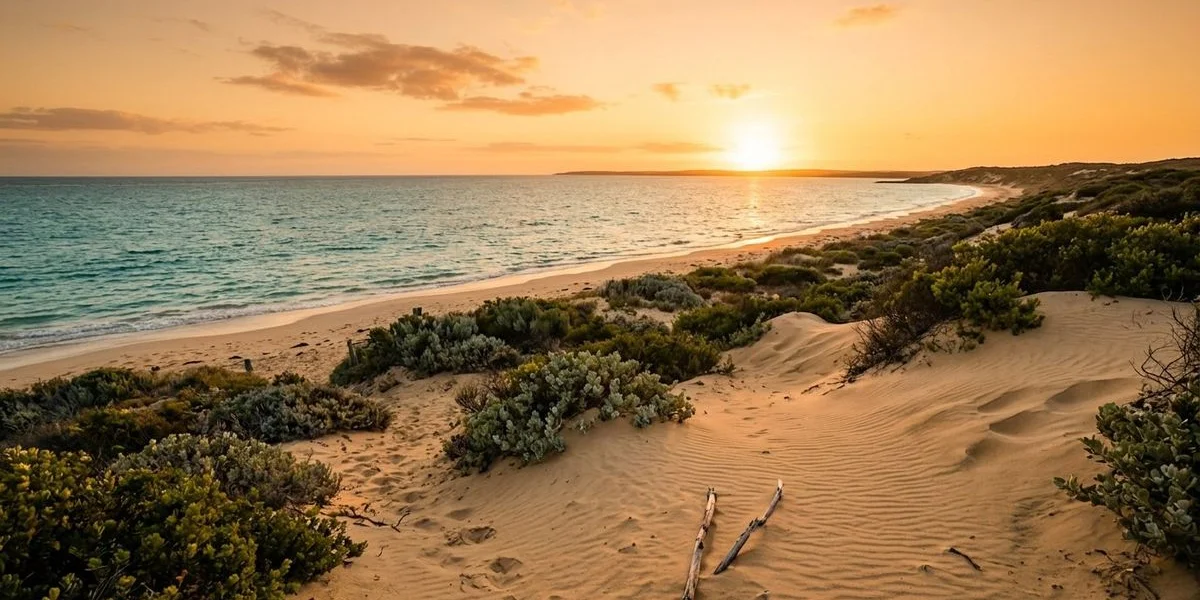
Coral Coast — Cervantes to Exmouth (April to October)
The Coral Coast is a semi-arid region that demands careful scheduling.
We strongly advise against travelling here during the height of summer due to safety risks.
Data from the Department of Fire and Emergency Services indicates that cyclone frequency peaks between January and March.
Peak Season (April to October)
This six-month window offers the world-class conditions Western Australia is famous for.
We see daily maximums settle between 25°C and 30°C.
Nights are cool enough for comfortable sleeping, and the southerly winds drop off.
The biological calendar dictates the best activities here:
- Whale Sharks: Best reliability is mid-March to July (tours run from Exmouth and Coral Bay).
- Humpback Whales: Migration peaks from July to October.
- Manta Rays: Year-round residents at Coral Bay, but conditions are calmest in Autumn.
- Wildflowers: Inland areas like Coalseam Conservation Park bloom July to September.
Off-Season (November to March)
Heat becomes the primary limiting factor during these months.
We record ground temperatures that can exceed 50°C, while air temps regularly top 40°C.
Many station stays and remote roadhouses operate on reduced hours or close entirely.
Why we warn against summer travel here:
- Cyclone Risk: Roads like the North West Coastal Highway often close due to flooding.
- Flies: The population of bush flies explodes in the heat.
- Closures: National Park gorges may close if heat stress risks are too high.
Crowds and Pricing Realities
Demand for the Coral Coast is incredibly high during the April and July school holidays.
We know that campsites at Cape Range National Park (specifically Osprey Bay) are released 180 days in advance via the Park Stay WA website.
They often sell out within minutes of release for these peak dates.
Smart travellers target May or August to miss the school rush while keeping the good weather.
South West — Busselton to Pemberton (September to May)
The South West is the wettest and most temperate part of the state.
We recommend this region for those who enjoy food, wine, and towering forests.
Rainfall statistics for towns like Pemberton show averages of over 1,100mm annually, mostly falling in winter.
Spring (September to November)
The landscape is recovering from winter rain and looks vibrant.
We suggest this time for hiking parts of the Cape to Cape Track.
Temperatures sit in the high teens to low 20s, which prevents overheating on the trails.
Orchid enthusiasts flock to the Stirling Ranges during this time to see endemic species found nowhere else.
Summer (December to February)
This is the classic beach holiday season.
We see the Leeuwin Current keep water temps near 22°C, making swimming pleasant.
Daylight lasts until nearly 8:00 PM, giving you maximum hours to explore.
The Trade-off:
- Pricing: Accommodation rates can jump 30-50% during the December/January break.
- Traffic: The drive from Perth to Margaret River can take four hours instead of three due to congestion.
Autumn (March to May)
This is the “insider’s pick” for the Margaret River region.
We love the atmosphere during the grape harvest (vintage), which usually wraps up by late April.
Winds are generally lighter than in spring, making afternoon beach walks more enjoyable.
Competition for campsites at Conto Campground or Boranup Forest drops off significantly after Easter.
Winter (June to August)
Expect heavy rain and cold nights.
We equip our vehicles with dual batteries and efficient fridges, so you stay comfortable inside regardless of the downpour outside.
The upside is seeing the waterfalls at full volume and enjoying roaring fires at local wineries.
Whale watching migrates to Augusta and Albany during this time as the pods move along the coast.
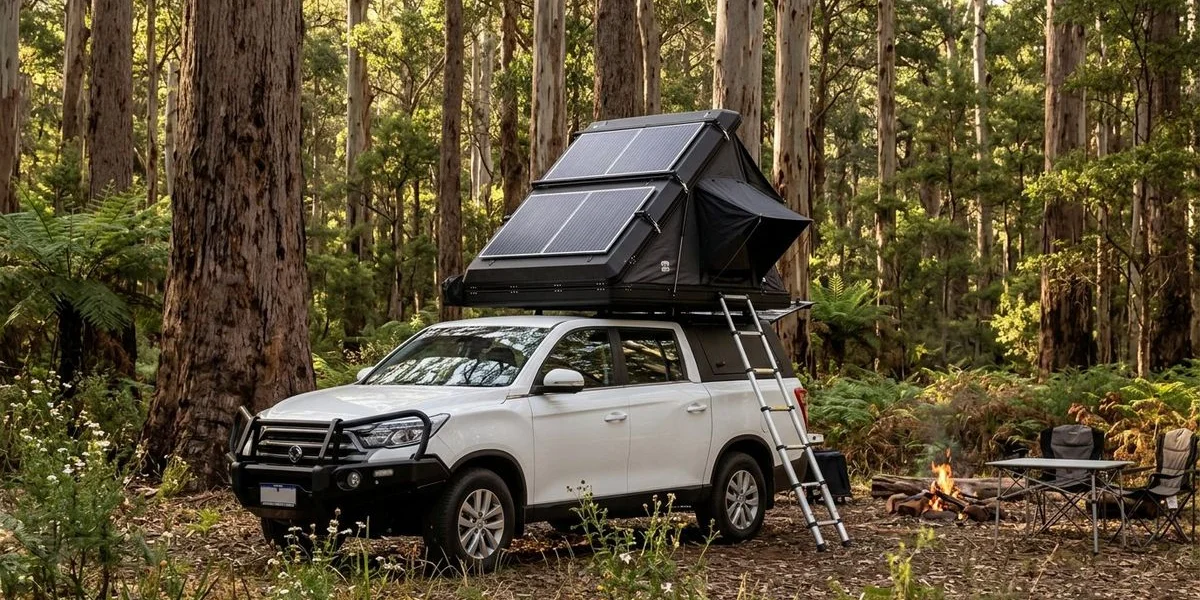
Esperance and the South Coast (October to April)
Esperance sits on the edge of the Great Australian Bight and experiences volatile weather.
We always tell clients to pack a windproof jacket even in summer.
The wind here is notorious, but the scenery makes it worth the effort.
Peak Season (October to April)
This period offers the only reliable beach weather for the region.
We find that February and March often provide the clearest water at Lucky Bay and Hellfire Bay.
Temperatures range from 20°C to 30°C, but a sudden wind shift can drop that by 10 degrees in an hour.
Booking Alert: Lucky Bay Campground is arguably the most popular campsite in WA. You must book 180 days out via Park Stay WA if you want a spot between December and April.
Off-Season (May to September)
Conditions turn properly cold and blustery during winter.
We see daytime highs struggle to reach 16°C.
However, Cape Le Grand National Park remains open and is stunningly empty.
If you have a diesel heater and good wet weather gear, you can have the white sands entirely to yourself.
Wildflower Season (July to November)
This is the largest flower show on Earth.
We track the blooms as they start in the Pilbara in June/July and move southward like a slow wave.
There are over 12,000 species, and remarkably, 60% of them are not found anywhere else on the planet.
Key Locations and Timing
You need to be in the right latitude at the right time.
- Mid-West (Geraldton/Mullewa): late July to early September.
- Wheatbelt (Wave Rock): August to mid-October.
- South West (Margaret River): October to November.
Pro Tip: Use the WA Visitor Centre Wildflower Tracker online before you drive. This tool relies on recent sightings rather than historical averages, giving you real-time data on where the blooms are popping.
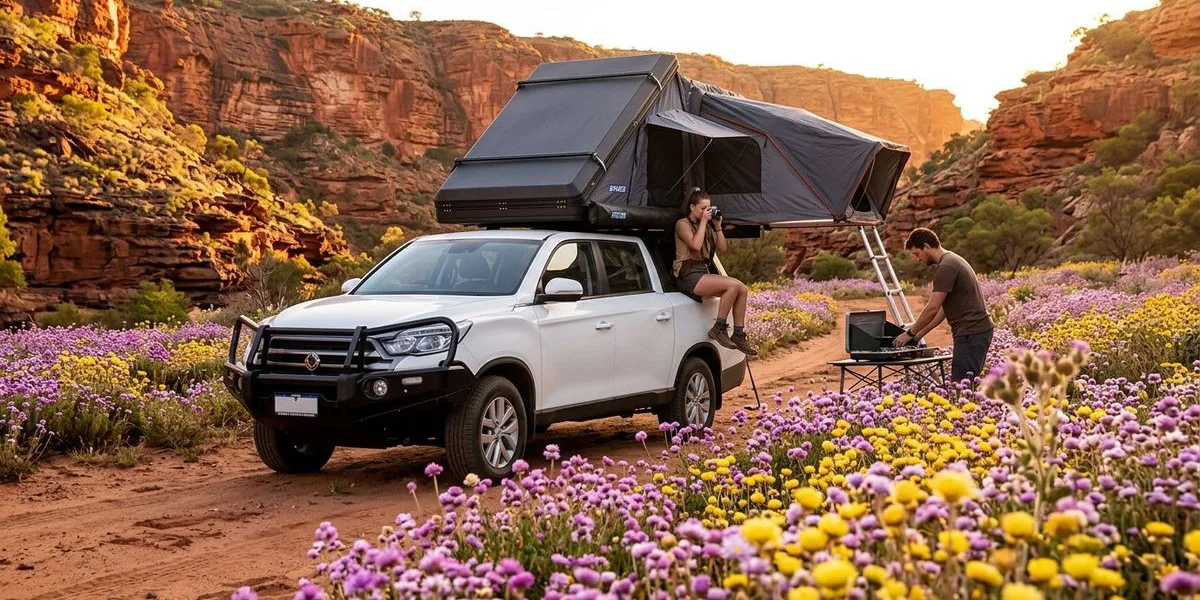
A 4WD camper gives you an advantage here because many of the best displays, like those in the Coalseam Conservation Park, are accessed via unsealed gravel roads.
School Holiday Pricing and Availability
School terms dictate availability more than the weather does.
We see availability vanish rapidly during WA school holidays.
You must plan around these 2026/2027 approximate windows to save money and avoid crowds.
The Major Blocks to Watch
| Holiday Period | Impact Level | Regional Focus |
|---|---|---|
| Summer (Mid-Dec to Late Jan) | Extreme | Entire State (Peak Pricing) |
| Easter / Term 1 Break (April) | High | Coral Coast & South West |
| Winter / Term 2 Break (July) | High | Coral Coast (Exmouth) |
| Spring / Term 3 Break (Sept/Oct) | Moderate | South West & Esperance |
Strategic Advice: Travel in the “shoulder” weeks immediately following a school term. For example, the first two weeks of February or the last two weeks of October offer near-peak weather with off-peak pricing.
Quick Reference: Best Months by Region
| Region | Ideal Window | Cautionary Window |
|---|---|---|
| Perth & Surrounds | September — May | June — August (Rain) |
| Coral Coast (Exmouth) | April — September | November — March (Cyclones/Heat) |
| South West (Margaret River) | February — May | June — August (Wet/Cold) |
| Esperance | January — April | May — September (Cold Winds) |
| Wildflowers | August — October | — |
The Bottom Line
Our experience suggests two specific “Golden Windows” for a multi-region trip.
April to May is superior for beach lovers and snorkellers heading north.
September to October is the clear winner for wildflower enthusiasts and hikers heading south.
Both windows avoid the biting flies of summer and the heavy rains of winter.
Western Australia is vast enough that there is always good weather somewhere.
We ensure our campers are ready for the conditions so you can focus on the drive.
Check the dates above, book your campsites early, and enjoy the road.
Ready to Start Your Adventure?
Premium 4WD campers from $160/day. Free Perth Airport pickup.
Check Availability