
Dual-Cab Ute Camper vs Motorhome: Which Suits Your WA Trip?
Comparing dual-cab 4WD campers and motorhomes for Western Australia road trips. Access, fuel costs, flexibility, and which handles WA roads better.

Dorian Menard
Founder & Owner
Some of the most common questions we get from people planning a Western Australia road trip are about vehicle choice: should I hire a motorhome or a 4WD camper?
The answer isn’t just about comfort; it is about where you can actually go.
Our team has spent years exploring this state, and we know that while both vehicles have their place, a WA trip is unique. The distances are vast, the best spots are often down corrugated dirt tracks, and the cost of fuel can be a shock if you aren’t prepared.
We have broken down the real-world differences below to help you decide which vehicle suits your itinerary.
Access: Where Can You Actually Drive?
For many WA itineraries, this single factor decides the argument.
Most rental motorhomes are strictly limited to sealed roads and well-maintained gravel highways. This restriction is fine if you only want to drive the Perth to Adelaide highway or stick to the bitumen on the way to Broome, but it locks you out of WA’s most spectacular destinations.
We see travellers miss out on Karijini National Park’s best gorges because the roads to Weano and Hancock gorges are often heavily corrugated gravel.
Specific Access Restrictions You Must Know:
- Purnululu National Park (Bungle Bungles): The 53km Spring Creek Track into the park is strictly high-clearance 4WD only. No standard motorhomes are permitted, and even caravans must be single-axle off-road models.
- Francois Peron National Park: To reach the stunning red cliffs and white sands of Cape Peron, you must deflate your tyres at the Heritage Precinct and drive through soft sand tracks. A motorhome cannot get past the homestead.
- The Gibb River Road: This 660km legendary track is 4WD territory. While road conditions vary, the corrugations and creek crossings generally void a standard motorhome rental contract immediately.
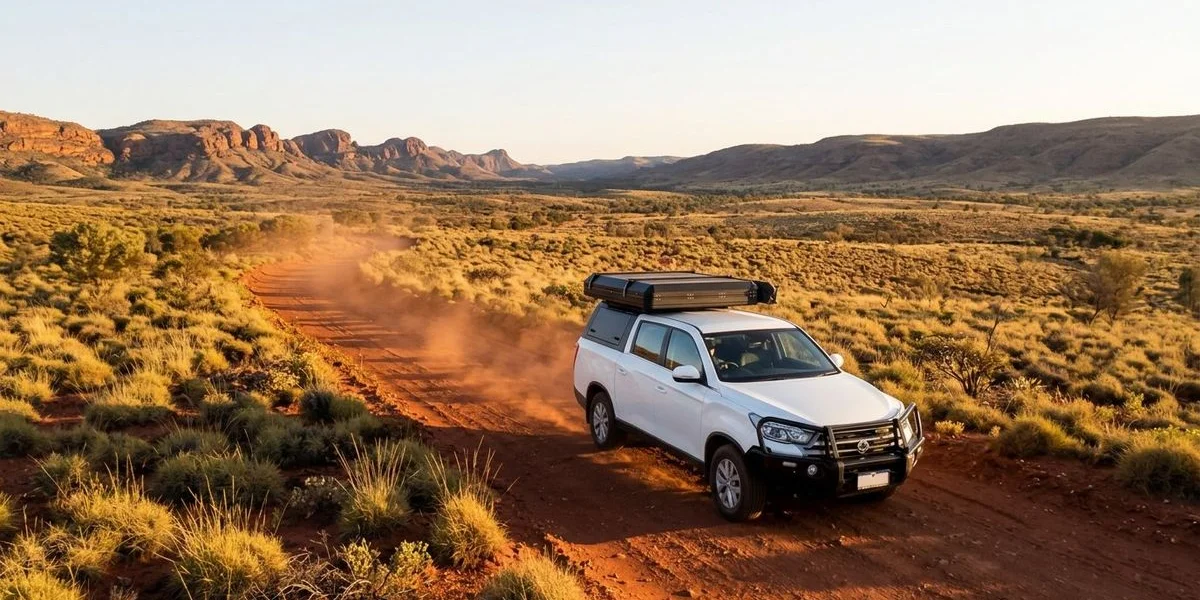
A dual-cab 4WD ute camper goes everywhere a motorhome goes, plus everywhere it doesn’t. That access advantage is massive in a state where the most memorable experiences are often at the end of a dirt track.
Fuel Economy and Running Costs
WA is vast, and the price of diesel climbs steeply the further you get from Perth.
In early 2026, we are seeing diesel prices in Perth sitting around $1.66 per litre, but remote roadhouses like Nanutarra or those on the Nullarbor are charging upwards of $2.25 per litre. That 60-cent gap adds up fast when you are covering 5,000 kilometres.
Real-World Consumption Comparison:
| Feature | Dual-Cab 4WD Camper (Loaded) | 6-Berth Motorhome |
|---|---|---|
| Fuel Consumption | 11 - 13 Litres / 100km | 18 - 25 Litres / 100km |
| Est. Range (Standard Tank) | ~650km - 800km | ~400km - 500km |
| Cost for 5,000km Trip | Approx. $1,100 - $1,300 | Approx. $1,900 - $2,400 |
Our data suggests that on a standard Perth to Exmouth return trip (roughly 2,500km), the fuel difference alone can save you between $400 and $600.
Another hidden cost to watch for is the “Remote Location Fee” or “Broome Surcharge.” Many motorhome companies charge an extra fee—sometimes exceeding $750 plus a one-way fee—if you pick up or drop off in Broome. 4WD hire arrangements often have different structures, so always check the total drive-away price.
Living Space and Comfort
This is the category where motorhomes genuinely shine.
A large motorhome offers a proper indoor living space with a kitchenette, dining area, bathroom, and a fixed bed. In poor weather, you can retreat inside, close the door, and be comfortable without any setup.
We always tell families that if you have toddlers or require a toilet on board for medical reasons, a motorhome is the safer choice.
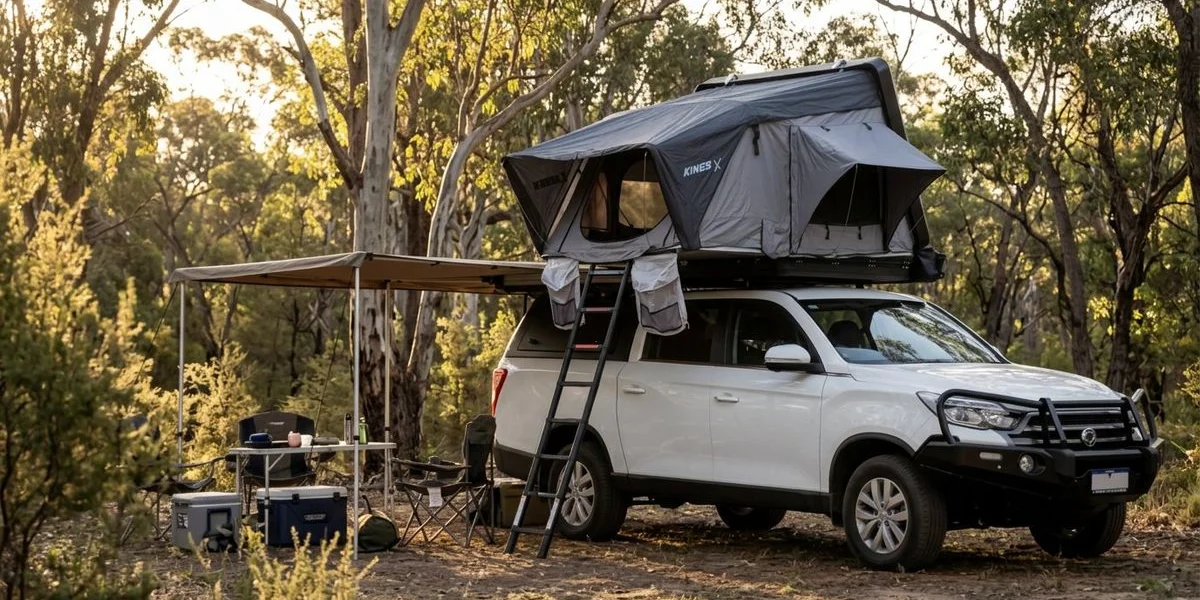
The Outdoor Lifestyle of a 4WD Camper: A dual-cab 4WD camper with a rooftop tent is an outdoor living setup. Your kitchen is under the awning, your dining room consists of camp chairs around a fold-out table, and your bedroom is accessed via a ladder.
In good weather—which WA delivers for most of the year—this is brilliant because you are living in the landscape, not watching it through a window.
The Coral Coast is dry and warm for eight months of the year, and even the South West’s wetter winter months have plenty of clear days between rain events. However, if you are travelling during the wet season (November to March) in the north, the humidity and storms can make canvas camping challenging.
Manoeuvrability and Parking
A dual-cab ute is roughly the same footprint as a large family car.
You can fit into standard 5.4-metre parking bays, navigate tight town streets in Fremantle easily, and perform a U-turn on a bush track without a spotter.
We often hear from clients who hired 7-metre motorhomes and found the stress of parking in towns like Margaret River or Broome overwhelmed their holiday.
Common Parking Pitfalls:
- Height Restrictions: Many beach car parks have height barriers to stop overnight camping, locking out tall motorhomes from day-use areas.
- Town Centres: In busy tourist hubs, you may have to park blocks away from the supermarket or café because your vehicle takes up two spaces.
- Campsite Sizes: Some older national park campgrounds have small, tight bays designed for tents or small trailers, making it impossible to park a large 6-berth rig.
Campsite Options and Fees
Motorhomes generally rely on powered sites at caravan parks to run their air conditioning and keep their house batteries charged.
This reliance means you are often paying $60 to $80 per night for a powered site in places like Broome or Exmouth during peak season. You are also limited to where you can stay, often ending up in rows of vehicles just like yours.
The Freedom of Self-Sufficiency: A self-contained 4WD camper runs on dual batteries, solar panels, and portable gas.
We encourage our customers to use WA’s incredible network of Department of Biodiversity, Conservation and Attractions (DBCA) campgrounds.
- Cost: usually $15 per adult, per night.
- Location: Right in the heart of nature (e.g., Osprey Bay in Cape Range or Silent Grove in the Kimberley).
- Booking: You can book these online via the “Park Stay WA” system up to 180 days in advance.
The ability to free camp or use these low-cost national park campgrounds drastically reduces your accommodation bill—often saving you over $1,000 on a two-week trip—and opens up a completely different style of travel.
The Verdict for WA
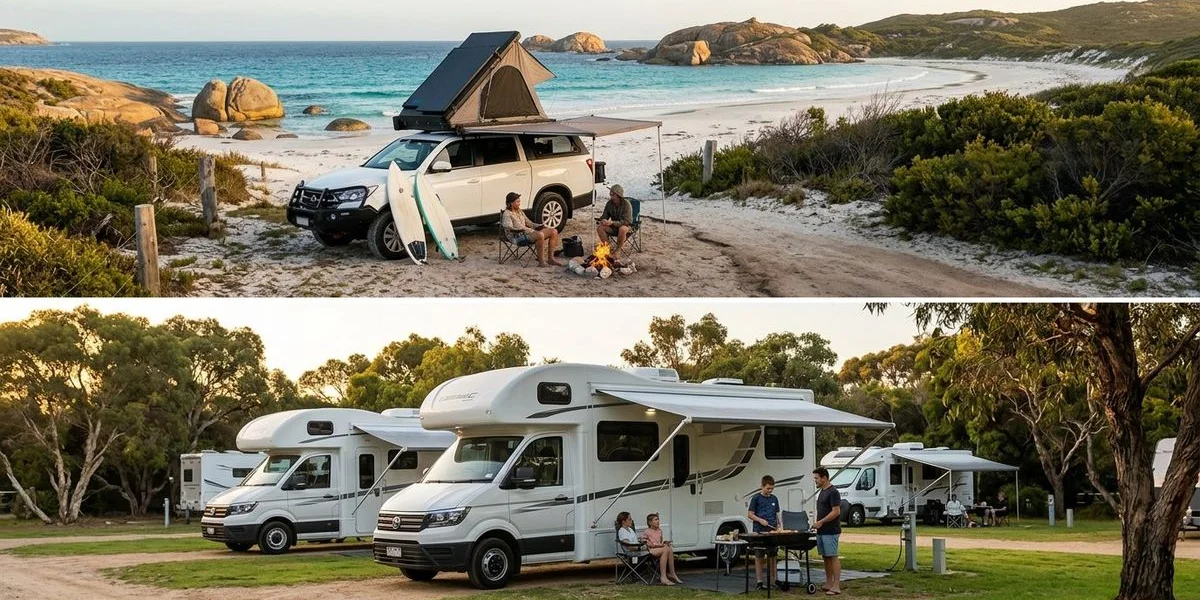
For a Western Australia road trip, a dual-cab 4WD camper wins on almost every practical measure: better access, lower fuel costs, easier parking, and cheaper campsites.
Motorhomes make sense if you are travelling with mobility limitations, need indoor living space for strict medical reasons, or plan to stick exclusively to sealed highways between major towns.
For everyone else, the ability to turn down that red dirt track to find a deserted beach is what makes a WA road trip special.
Still Deciding?
If you are unsure which option suits your specific trip plans, reach out and let us know your itinerary.
We will give you an honest recommendation—even if it means pointing you toward a motorhome hire company for your particular route.
Ready to Start Your Adventure?
Premium 4WD campers from $160/day. Free Perth Airport pickup.
Check Availability