
Essential Packing List for a WA Road Trip in a 4WD Camper
What to bring on your Western Australia road trip. Personal items, food planning, clothing, and what your 4WD camper already includes.

Dorian Menard
Founder & Owner
Most travellers overthink the packing phase.
We see it every season at the depot.
A couple arrives ready to tackle the Gibb River Road with three massive hard-shell suitcases.
Those rigid cases simply won’t fit in a compact off-road camper setup.
You need to pack for the specific constraints of a 4WD trip.
Space is your most valuable currency on the road.
We have refined this list after watching hundreds of clients depart from Perth.
This guide clarifies exactly what equipment is necessary and what items will just get in your way.
What Your 4WD Camper Already Includes
Reviewing the standard equipment list is the first step before you buy a single item.
We ensure our vehicles are stocked with the major hardware so you can focus on personal gear.
Duplicating equipment is the fastest way to clutter your living space.
The Standard Gear Loadout
| Category | Item Included | Why You Don’t Need to Pack It |
|---|---|---|
| Shelter | Rooftop tent & bedding | Mattress, pillows, and sleeping bags are provided. |
| Cold Storage | 40L+ 12V Fridge | No need for Eskies or bags of ice that melt in hours. |
| Kitchen | Dual-burner gas stove | Includes a full gas bottle, pots, and pans. |
| Dining | Table, chairs & mess kit | Plates, cups, and cutlery for four people are standard. |
| Safety | Recovery & First Aid | Snatch straps, MaxTrax, and basic medical kits are onboard. |
| Water | 40L Tank | Built-in storage handles your washing and cooking water. |
This equipment forms the foundation of your camp setup.
You can cross these heavy and bulky items off your personal checklist immediately.
Essential Packing List for a WA Road Trip in a 4WD Camper: Clothing
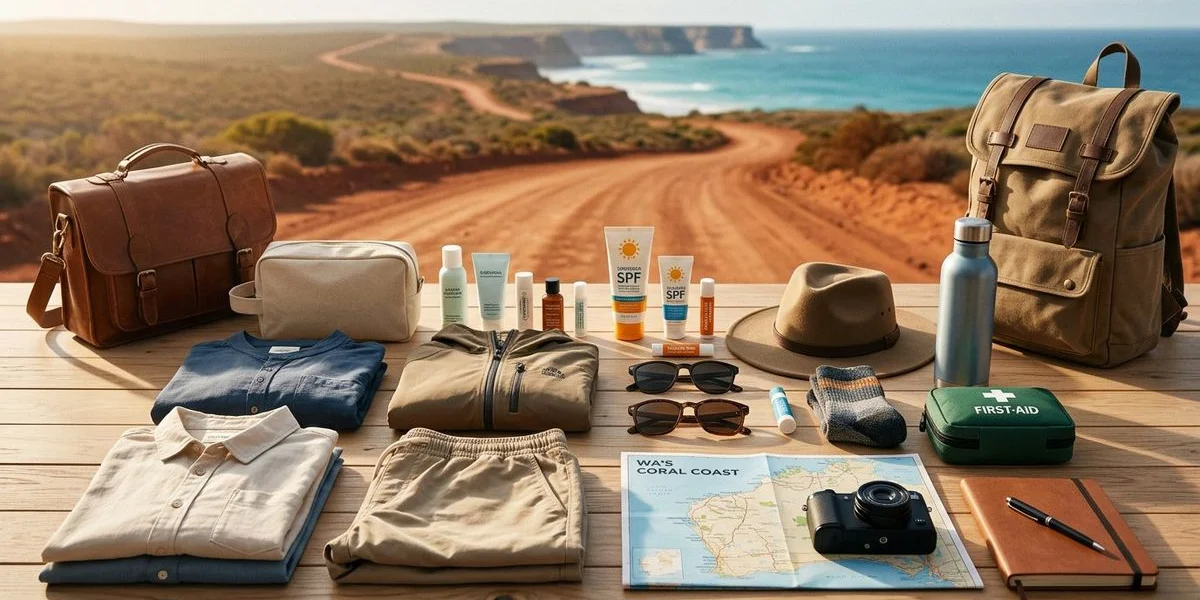
The climate in Western Australia dictates your wardrobe choices.
We advise clients to ignore the “always hot” stereotype.
Inland temperatures in the Pilbara can drop to 5°C at night during July and August.
Layering is the only effective strategy for these temperature swings.
Warm Weather Gear (Coral Coast & Kimberley)
- Sun-protective shirts: 4-5 lightweight, long-sleeve shirts. Brands like Columbia or Patagonia offer UPF 50 ratings which are vital here.
- Quick-dry shorts: 2 pairs of board shorts or hiking shorts.
- Lightweight trousers: 1 pair. These protect your legs from spinifex grass while bushwalking.
- Wide-brim hat: A baseball cap leaves your ears and neck exposed to severe sunburn.
- Footwear: Thongs for the shower block and closed-toe hiking shoes for the gorges.
- Shell jacket: A light rain jacket acts as a windbreaker on coastal evenings.
Cool Weather Additions (South West & Winter Nights)
- Mid-layer insulation: A fleece or down puffer jacket is essential for desert nights.
- Sleeping thermals: A set of merino wool base layers makes a massive difference in a rooftop tent.
- Beanie and thick socks: Heat escapes through your head and feet.
- Tracksuit pants: Comfortable loose pants for sitting around the campfire.
Critical Fabric Advice
Cotton is generally a poor choice for active road trips.
It absorbs sweat, stays wet, and provides zero insulation when damp.
Our team recommends Merino wool or synthetic blends.
These fabrics wick moisture away from the skin and resist odours far longer than cotton.
Pro-Tip: Do not bring white clothing.
The red Pindan dust found north of Geraldton stains light fabrics permanently.
Stick to navys, greys, and earth tones to keep your gear looking decent.
Personal Care and Toiletries
You will not always have access to a pristine caravan park bathroom.
We encourage a minimalist approach to hygiene that respects the environment.
Biodegradable products are non-negotiable for remote camping.
The Hygiene Kit
- Heavy-duty Sunscreen: Look for “4 hour water resistant” ratings. The WA sun index is extreme.
- Tropical Strength Insect Repellent: Flies and mosquitoes are relentless in the north. Products with DEET or Picaridin work best.
- Dr. Bronner’s Soap: One bottle of biodegradable concentrate handles body wash, shampoo, and dishwashing.
- Moisturiser: The dry air sucks moisture from your skin rapidly.
- Baby Wipes: These are a “shower in a bag” for nights when water is scarce.
Medical Essentials
- Prescription Meds: Carry two weeks of extra supply in a separate bag.
- Antihistamines: Biting midges (sandflies) on the coast can cause severe allergic reactions.
- Hydration Salts: Gastrolyte or similar powders help recovery after long hikes in the heat.
Food and Drink Logistics
Resupplying in remote WA is expensive and limited.
We warn travellers that roadhouses often charge 30-50% more than city supermarkets.
Strategic shopping in Perth or major regional hubs like Geraldton or Broome saves money.
Pantry Staples (Buy in Perth)
Stock up on these long-life items before you leave the city limits:
- Carbohydrates: Rice, pasta, and tortilla wraps (wraps don’t get crushed like bread).
- Proteins: Canned tuna, beans, and lentils.
- Cooking basics: Olive oil, salt, pepper, and a spice mix.
- Breakfast: Muesli, oats, and long-life milk (UHT).
- Snacks: Trail mix and muesli bars prevent hunger-induced irritability on long drives.
The Fresh Food Strategy
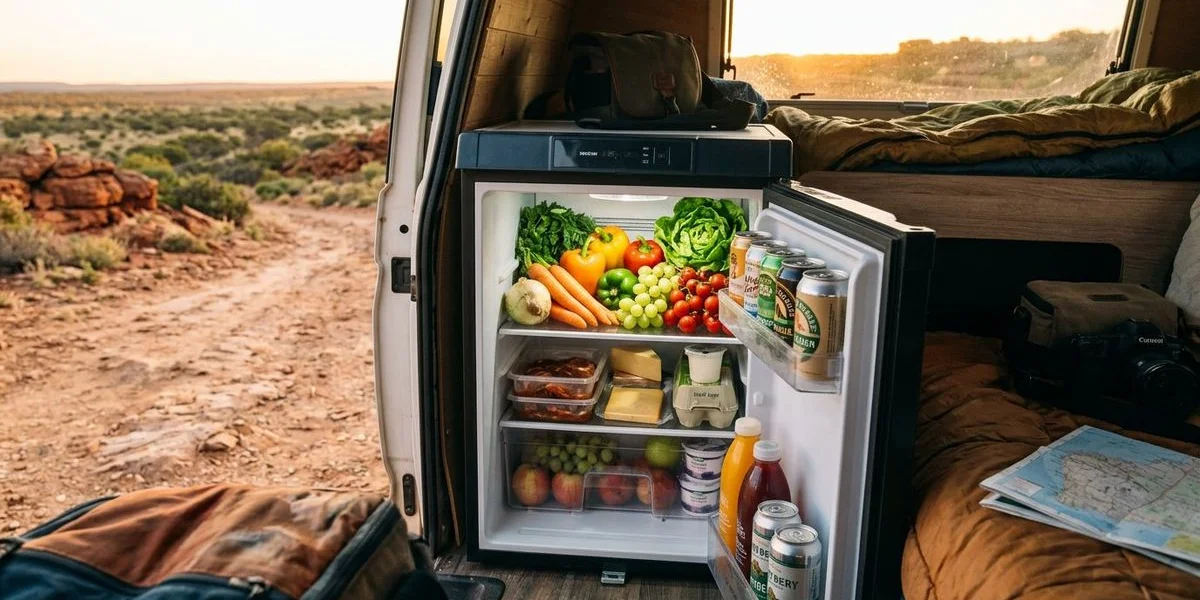
Your 12V fridge is a game changer for meal quality.
We suggest vacuum-sealing your meat before the trip.
Cryovac meat lasts up to two weeks in a fridge compared to three days in standard packaging.
Buy your fresh fruit and veg at the last major town (Carnarvon or Port Hedland) before heading into the true outback.
Water Management
The onboard tank is primarily for washing up.
We advise carrying separate drinking water.
Purchase two 10L casks of water from a supermarket.
The square shape packs easily and ensures you have a dedicated emergency supply.
Rule of Thumb: Plan for 4-5 litres of water per person, per day in summer conditions.
Electronics and Connectivity
Mobile coverage effectively disappears once you leave the main highways.
Our vehicles go to places where your phone will likely say “SOS Only.”
Preparation is the only way to stay safe and on track.
- Offline Maps: Download map areas on Google Maps or purchase the WikiCamps app ($7.99 AUD) before leaving WiFi. WikiCamps is invaluable for finding free campsites.
- UHF Radio: We ensure a radio is in the vehicle. Channel 40 is the truckie and traveler standard for communication.
- 12V Chargers: Bring cables for all devices.
- Head Torch: Essential for hands-free cooking or repairs in the dark.
The Starlink Option
Remote work is becoming common on these trips.
We have seen a surge in travellers renting Starlink units.
High-speed satellite internet changes the safety dynamic and allows for weather checks in real-time.
Verify your rental provider offers this add-on if staying connected is critical for your business.
Safety and Emergency Items
The items we provide cover vehicle recovery, but personal safety is your responsibility.
A few specific additions can prevent a minor issue from becoming a crisis.
- PLB (Personal Locator Beacon): If you are going off-road solo, hire a PLB. You can register your trip details with AMSA (Australian Maritime Safety Authority).
- Paper Maps: Hema Maps are the gold standard. Electronics fail, but paper does not.
- Cash: Some remote stations and campsites still operate on a cash-only basis due to poor internet for EFTPOS.
- Spare Glasses: If you wear contacts or glasses, bring a backup pair. Dust makes contacts difficult to wear in the Pilbara.
What to Leave Behind
Overpacking creates daily frustration.
We often find these items left behind in the “free food” bin at the depot:
- Hard suitcases: They cannot be compressed and slide around the cabin. Use soft duffel bags.
- 240V Appliances: Hairdryers and straighteners will not work on a standard 12V car battery system.
- Heavy Novels: A Kindle saves kilograms of weight and space.
- Excessive Towels: One quick-dry microfiber towel per person is sufficient.
Smart Packing Strategy
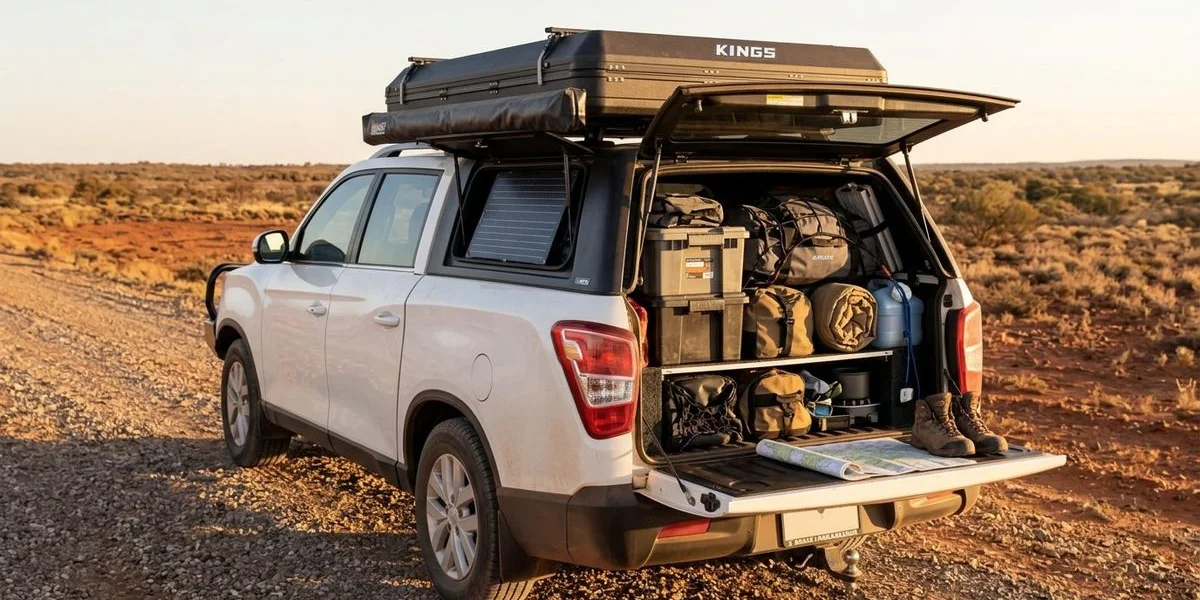
Weight distribution impacts how the vehicle handles in sand and mud.
We instruct drivers to keep heavy items (water, canned food, tools) low and central.
This lowers the centre of gravity and reduces body roll on corners.
Organisation Tips
- Packing Cubes: Group clothes by category (e.g., swim, sleep, day). This stops your bag from exploding into a mess.
- Plastic Tubs: Use clear plastic containers for dry food. This prevents ants and keeps mice out of your supplies.
- The “Daily” Box: Keep snacks, sunscreen, and cameras in the front cab or an easily accessible spot.
Perform a “dry run” pack the day before you fly out.
Finding out you have too much gear at 5 AM is stressful.
Contact our team if you have a specific item you are unsure about.
We can tell you immediately if it will fit or if it is just dead weight.
Ready to Start Your Adventure?
Premium 4WD campers from $160/day. Free Perth Airport pickup.
Check Availability