
Overlanding for Beginners: Everything You Need to Know
New to overlanding? This beginner's guide covers gear, vehicle setup, trip planning, and tips for your first self-sufficient road trip in Australia.

Dorian Menard
Founder & Owner
Overlanding is one of those terms that gets thrown around often, but it simply means self-sufficient travel to remote destinations where the journey itself is the main purpose. It is not about speed or luxury.
You are exploring at your own pace while carrying everything you need.
This means spending time in places most people never see. Australia, and Western Australia in particular, is one of the best places on earth to do it.
We have spent twelve years helping people prepare for their first outback adventures from Perth.
Our team has put together this guide covering everything a beginner needs to know before heading out.
What Makes Overlanding Different from Camping?
Regular camping usually involves driving to a caravan park or campground, setting up near amenities, and having mobile reception. Overlanding takes things further. You are travelling to places where there may be no facilities, no phone signal, and no other people for kilometres in every direction.
The key difference is self-sufficiency.
We ensure our vehicles carry shelter, water, food, cooking equipment, recovery gear, and a power system. You need to be prepared to handle breakdowns, flat tyres, and navigation challenges without relying on roadside assistance or Google Maps.
That might sound intense, but it is exactly what makes it rewarding. There is a genuine sense of accomplishment in reaching a remote gorge or pristine beach knowing you got there under your own steam.
Choosing the Right Vehicle
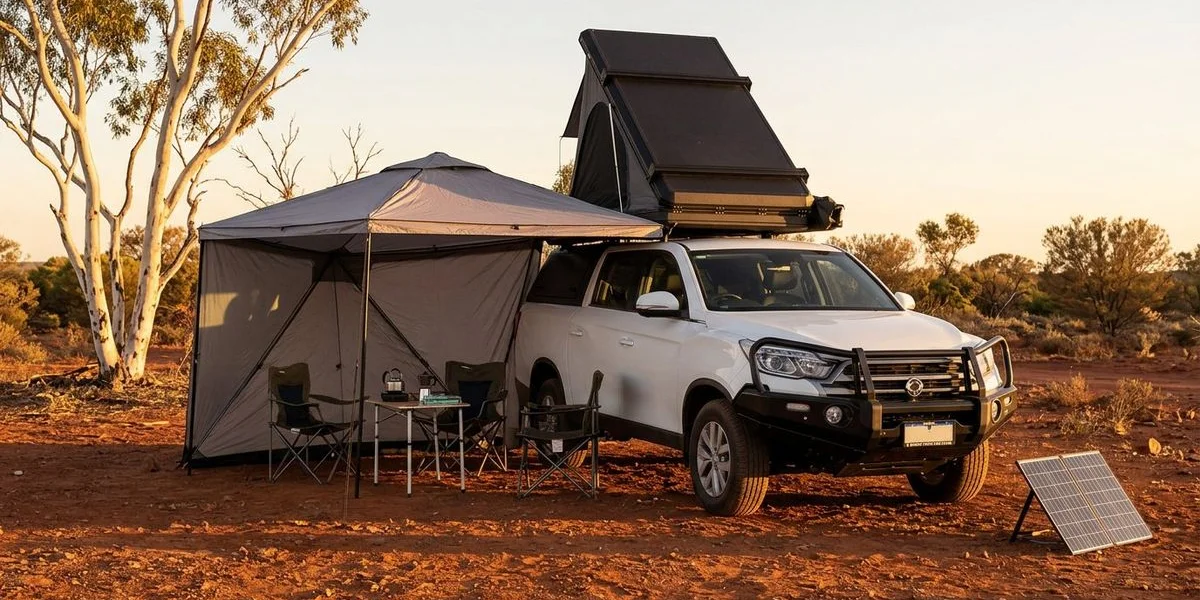
For Australian overlanding, a 4WD is essential once you leave sealed roads. You do not need the most expensive rig on the market. A vehicle that can handle corrugated dirt roads, sandy tracks, and river crossings is the priority.
We find that a dual-cab ute with a canopy or tray-back camper setup is the most popular choice in Australia.
This setup offers the off-road capability of a proper 4WD with enough cargo space for all your gear. Vehicles like the Toyota Hilux, Ford Ranger, and Isuzu D-MAX are proven performers on Australian tracks.
Key Vehicle Features
When assessing a vehicle for remote travel, look for these specific specifications:
- Low Range 4WD: This is non-negotiable for steep descents and soft sand.
- Ground Clearance: Aim for at least 220mm, though 250mm is better for the Gibb River Road.
- Fuel Range: Some WA stretches, like the section between roadhouses on the Nullarbor, can exceed 200km, but off-road consumption is higher. Ideally, you want an 800km range.
- Payload Capacity: Ensure the vehicle’s GVM (Gross Vehicle Mass) can legally carry your gear, fuel, and passengers.
- Rated Recovery Points: Factory tie-down points are not safe for snatch recoveries. You need rated points.
Buying vs. Hiring: A Cost Comparison
If you are not ready to invest in your own setup, hiring a fully kitted 4WD camper is the smartest way to try overlanding without the upfront cost.
| Feature | Buying Your Own Rig | Hiring a 4WD Camper |
|---|---|---|
| Upfront Cost | $60,000 - $120,000+ (Vehicle + Mods) | $200 - $350 per day (approx.) |
| Maintenance | Owner responsible for all servicing & repairs | Included in rental fee |
| Storage | Requires garage or driveway space | No storage required |
| Depreciation | Vehicle loses value over time | Zero depreciation risk |
| Readiness | Requires weeks of fitting out and packing | Pick up and go immediately |
Everything is already fitted and tested for WA conditions in our rental fleet.
Essential Gear for Your First Trip
Overlanding gear falls into a few main categories. Here is what you genuinely need versus what is nice to have.
Must-Have Gear
- Water Storage: You need a minimum of 40 litres for two people for a weekend. For remote trips, aim for 5-6 litres per person per day.
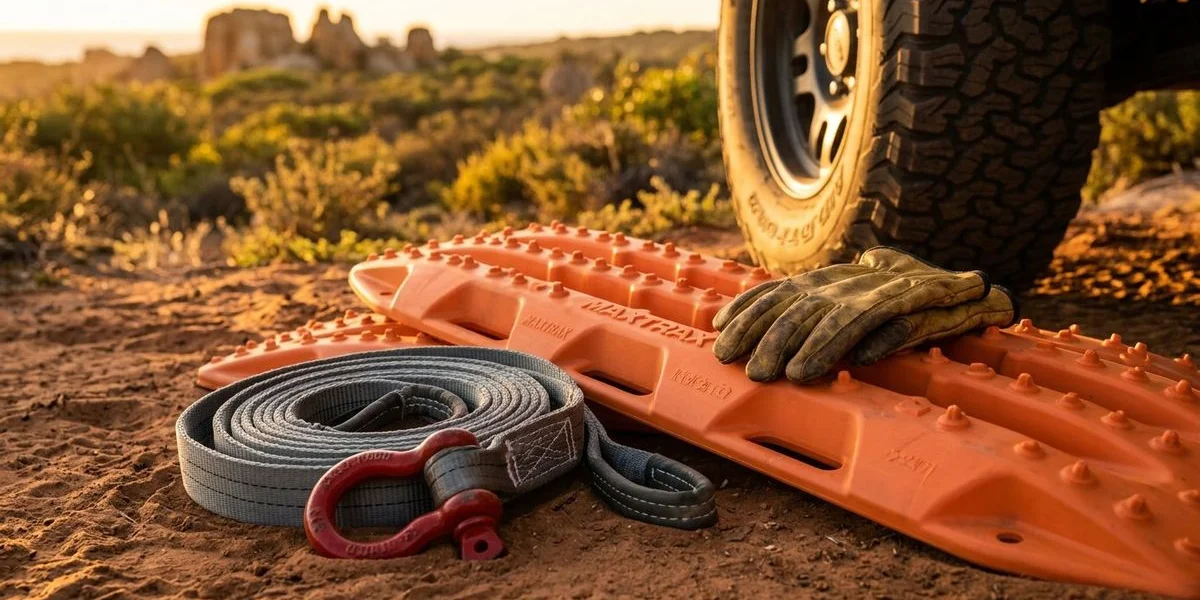
- Recovery Kit: A kinetic snatch strap (8,000kg rating minimum), rated bow shackles, and MaxTrax or Treds traction boards are vital.
- First Aid Kit: A standard chemist kit is not enough. You need a remote area kit that includes snake bite bandages and burn treatments.
- Spare Tyres: We always recommend two spares for remote WA travel, or at least a comprehensive plug repair kit and air compressor.
- Navigation: Google Maps often fails offline. Use Hema Maps or the WikiCamps app ($7.99) alongside physical paper maps.
- Fire Extinguisher: This is required by law in many WA national parks and is just good sense.
- Communication: A UHF radio (like a GME handheld) is standard. For true safety, carry a PLB (Personal Locator Beacon) or a Garmin inReach.
Camping Essentials
- Shelter: Rooftop tents are popular for quick setups, but a high-quality swag is excellent for cooler nights.
- Cooking Setup: A butane stove is cheap, but a propane gas bottle setup is more reliable in wind.
- Fridge: A 12V compressor fridge (like Dometic or Engel) eliminates the need for ice runs.
- Lighting: LED strips in your awning and a quality head torch per person are essential.
- Comfort: Do not underestimate the value of a solid camp chair after six hours of driving.
Nice to Have
- Awning: The WA sun is relentless. A 270-degree awning offers the best coverage.
- Portable Shower: A simple 12V pump shower or a solar bag makes a massive difference to morale.
- Power System: A dual battery system or a portable lithium power station (like an EcoFlow or Bluetti) keeps your fridge running overnight.
- Satellite Internet: Starlink Roam (approx. $174 AUD/month) now makes high-speed remote work possible from almost anywhere in WA.
Planning Your First Overlanding Trip
Don’t try to conquer the Gibb River Road on your first outing. Start with something manageable that still gives you the overlanding experience.
Beginner-Friendly WA Routes
- Perth to Lancelin Dunes: A short 90-minute drive offering easy sand driving practice and coastal camping.
- Mundaring to Dwellingup: Explore the Captain Fawcett Track for a mix of gravel and forest scenery.
- Cervantes and the Pinnacles: Combine sealed roads with the sandy tracks into Nambung National Park.
- South West Forests: The Yeagarup Dunes near Pemberton offer a serious challenge for those ready to air down tyres.
Trip Planning Checklist
- Research the Route: Read recent trip reports on forums like 4x4Earth. Check road closures on the Main Roads WA website.
- Secure Permits: Purchase a DBCA Park Pass. The ‘Holiday Pass’ covers up to 4 weeks for $60, or an Annual All Parks Pass is $130 (2025/26 pricing).
- Share Your Itinerary: Tell a trusted contact your route and expected return time.
- Weather Check: WA conditions change fast. The Kimberley wet season (Nov-April) can close roads instantly.
- Fuel Strategy: Calculate consumption at 15-18L/100km for a loaded 4WD. Identify every roadhouse along your route.
- Water Sources: Never assume a tank on a map has water. Carry 20% more than you calculate you will need.
Common Beginner Mistakes
I’ve seen thousands of travellers head out from Perth over the years, and certain mistakes come up again and again.
Overpacking the Vehicle Every extra kilogram affects your fuel consumption, tyre wear, and vehicle handling. Pack what you need rather than what you might need.
Underestimating Distances WA is enormous. A 400km drive on corrugated dirt takes much longer than on bitumen. Plan for an average speed of 60-70 km/h on unsealed roads rather than 100 km/h.
Ignoring Tyre Pressures Dropping your tyre pressure for sand and dirt roads is essential. We recommend 22-28 PSI for gravel and 16-18 PSI for soft sand to prevent bogging.
Not Carrying Enough Water The general rule is 4-5 litres per person per day. In the Pilbara heat, you will drink more than you expect.
Driving at Dawn and Dusk This is peak wildlife time. Kangaroos and cattle are most active between 5 am and 7 am, and again from 5 pm to 7 pm. Hitting a roo can end your trip instantly.
Building Your Skills Gradually
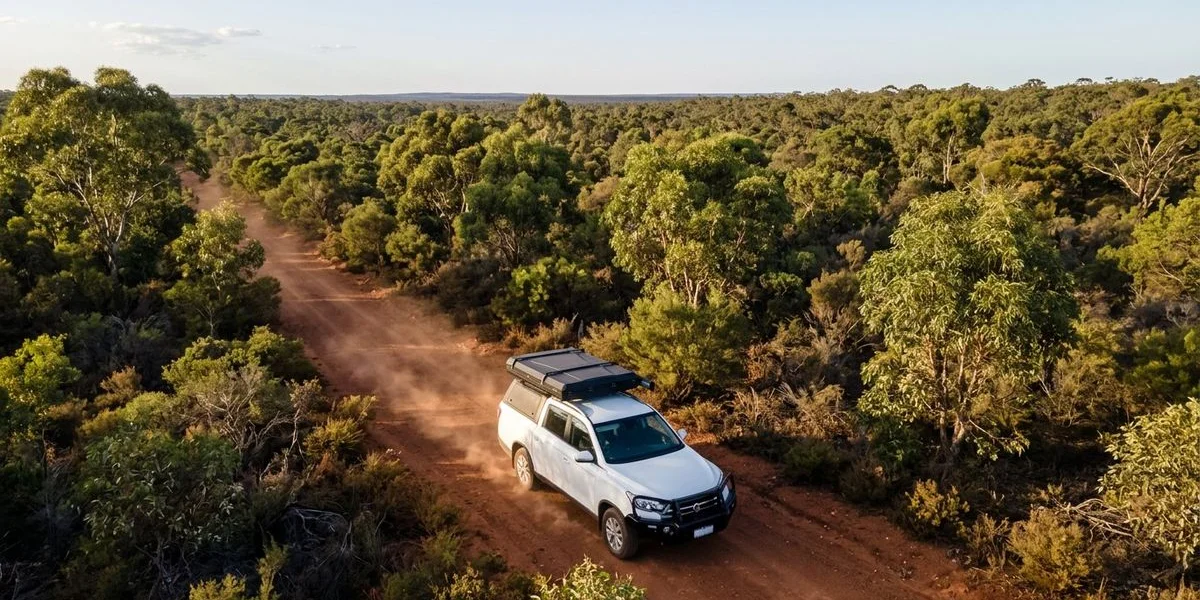
Overlanding is a skill you develop over time. Each trip teaches you something distinct. You learn how to read a track, when to air down, how to cook efficiently with limited water, and how to pick a good campsite before dark.
Start with weekend trips close to Perth.
Then you can work your way up to multi-day routes. After a few shorter outings, you’ll be genuinely ready for iconic WA adventures like the Coral Coast, the Nullarbor, or the Gibb River Road.
The overlanding community in Perth is welcoming and generous with advice. Join local 4WD clubs or follow groups like “Perth 4WD & Camping” on Facebook. Every experienced overlander was a beginner once.
Getting Started Without Buying Everything
The beauty of hiring a fully equipped 4WD camper is that you can experience overlanding without investing tens of thousands in vehicle modifications and gear. Our campers come fitted with rooftop tents, fridges, cooking equipment, recovery gear, and power systems.
You get everything you need to head out and explore WA’s incredible landscapes from day one.
If overlanding clicks for you, you will know exactly what gear and setup you want when you are ready to build your own rig. There’s no better test drive than a real trip.
Ready to Start Your Adventure?
Premium 4WD campers from $160/day. Free Perth Airport pickup.
Check Availability