
Rooftop Tent vs Ground Tent: Which Is Better for a WA Road Trip?
Compare rooftop tents and ground tents for Western Australia touring. Comfort, setup time, weather protection, and why most WA road trippers choose rooftop.

Dorian Menard
Founder & Owner
If you are planning a Western Australia road trip in a 4WD camper, the sleeping arrangement is likely your biggest logistical decision. The choice between a rooftop tent and a traditional ground tent defines your daily rhythm.
We have spent over twelve years outfitting 4WD campers for specific WA conditions.
Our team has heard every debate, seen every setup, and fixed plenty of mistakes.
Here is the honest comparison based on data, comfort, and the realities of the Australian outback.
Setup Time and Convenience: The 120-Second Rule
The single biggest advantage of a rooftop tent is speed.
After driving eight hours from Perth to Kalbarri or navigating the corrugated tracks of the Gibb River Road, fatigue is a real safety factor.
We have found that the last thing anyone wants is a thirty-minute struggle with tent poles.
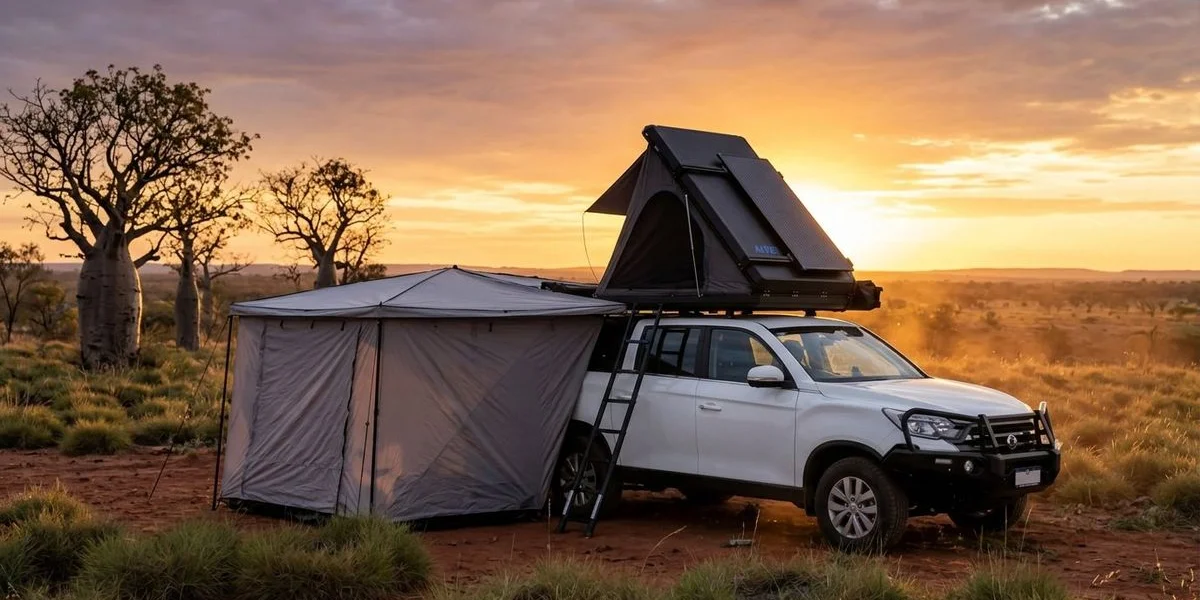
A quality rooftop tent, particularly hard-shell models like the ones on our OFFGRID Wanderer, unfolds in under two minutes.
You simply unclip the stainless steel latches.
Gas struts push the structure open automatically.
Your bed is instantly ready with the mattress, pillows, and sleeping bag already laid out inside.
The Reality of Ground Tent Setup
A ground tent requires a much longer process that eats into your relaxation time.
- Site Selection: You must find a perfectly flat, debris-free 3x3 metre patch.
- Clearing: You need to remove sharp rocks, sticks, and bindis.
- Assembly: You have to thread poles, hammer in pegs, and attach guy ropes.
- Internal Setup: You must then inflate mattresses and unroll sleeping bags.
This extra effort matters immensely when you are moving camp every day, which is typical for a Coral Coast or South West itinerary.
Comfort and Sleep Quality Metrics
We prioritize sleep quality because driver fatigue is a major risk on long WA highways.
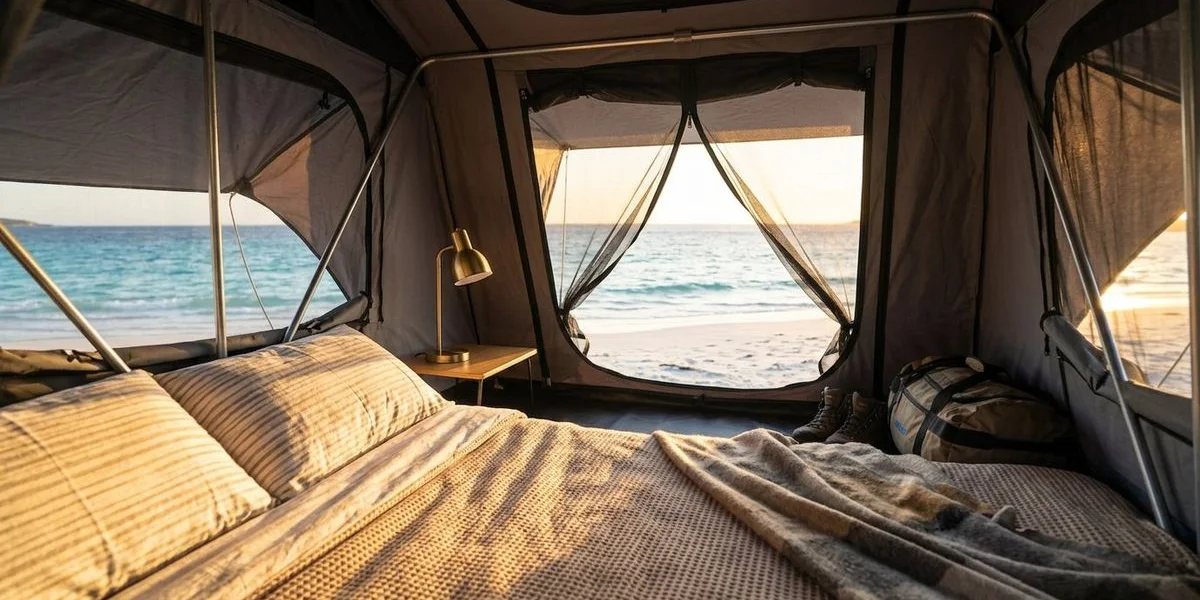
Rooftop tents generally come with a built-in high-density foam mattress, typically between 50mm and 75mm thick.
This setup offers support comparable to a basic home mattress.
You are also sleeping on a solid, flat base rather than the ground.
Insulation and Airflow
Ground tents require you to bring your own sleeping mat or swag.
Even a premium self-inflating mat often struggles to mask the feeling of the hard limestone ground common in the South West.
Temperature regulation is another critical data point.
- Heat: Being 1.5 metres off the ground captures the cooling coastal breezes that ground tents miss.
- Cold: During winter in the Great Southern, the elevated base insulates you from the cold earth, which can suck body heat away 50 times faster than air.
Weather Protection: Handling the “Southerly Buster”
Western Australia throws extreme weather at travellers.
We see blazing sun, horizontal rain in the South West forests, and the famous “Southerly Buster” winds along the coast.
Rooftop tents are engineered as a complete, integrated system designed to withstand these forces.
The canvas is typically 280g to 320g ripstop poly-cotton.
This material is significantly heavier and more durable than the 75D polyester found in standard hiking tents.
Wind Stability Comparison
| Feature | Rooftop Tent | Standard Ground Tent |
|---|---|---|
| Wind Rating | Often rated for 60-80 km/h gusts | Usually 30-40 km/h before pole stress |
| Waterproofing | 3000mm+ waterhead rating | 1500mm-2000mm average |
| Peg Requirement | None (bolted to vehicle) | Essential (struggles in sand/rock) |
A cheap festival tent will likely collapse during a windy night in Exmouth.
While a premium expedition ground tent can handle the weather, it often costs as much as a rooftop unit and takes four times as long to pitch.
Ground Conditions and Wildlife Risks
This is where WA-specific conditions dictate the equipment.
Much of the state’s best camping involves red pindan soil, soft coastal sand, or rock-hard limestone.
Finding a genuinely flat patch for a ground tent is difficult.
We also see many travellers struggle to hammer pegs into the concrete-like ground of the Pilbara.
The Wildlife Factor
Western Australia is home to creatures that are best avoided at night.
- Ants: Bull ants and meat ants are aggressive and active in many campsites.
- Centipedes: The Giant Centipede (Scolopendra) is common in the north and delivers a painful bite.
- Reptiles: Snakes and scorpions are present throughout the outback.
Sleeping elevated removes you from ground-level encounters entirely.
We do not want to exaggerate the risk as most creatures avoid humans.
However, the psychological benefit of being off the ground provides genuine peace of mind for international visitors and families.
The Ground Tent Advantages
We would be doing you a disservice if we ignored the specific scenarios where ground tents win.
There are three main cases where a traditional tent is the superior choice.
1. Base Camping Flexibility
If you plan to stay in one caravan park for a week, a ground tent allows you to drive your vehicle without packing up camp.
A rooftop tent commits your vehicle to the campsite until you pack it down.
2. Remote Hiking Access
A ground tent can go where a vehicle cannot.
If you want to hike into a remote spot on the Bibbulmun Track, you obviously cannot take the rooftop tent with you.
3. Large Groups
Rooftop tents generally sleep two adults comfortably.
Families of four or five will often need a ground tent or swag to accommodate the extra passengers alongside the main vehicle setup.
Which Is Better for WA?
For the vast majority of WA road trips, the rooftop tent is the superior logistical choice.
The itineraries for Perth to Exmouth, the South West loop, or the Gibb River Road usually involve moving every 1-2 days.
The fast setup, superior mattress density, and elevation from rocky ground make it the most practical option for touring.
Ground tents still make sense for dedicated hikers or budget-conscious travellers who already own high-quality camping gear.
Our Recommendation
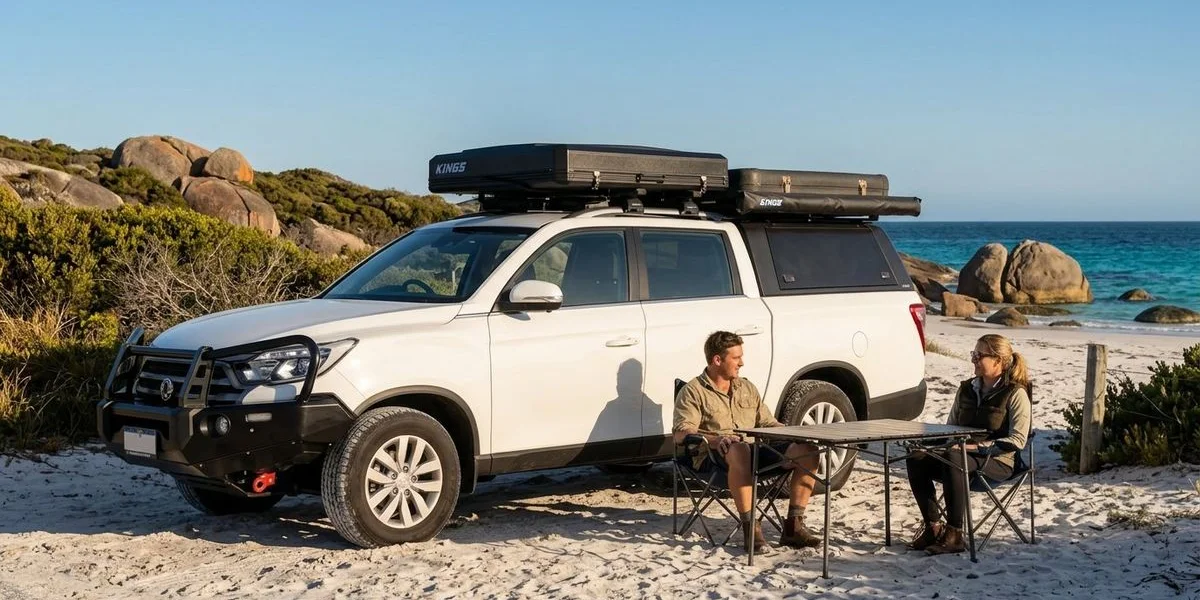
Every vehicle in our 4WD camper hire Perth fleet comes fitted with a quality rooftop tent as standard.
We made this decision after analyzing years of feedback from customers travelling from Ningaloo to the Nullarbor.
It is simply the setup that works best for the rugged conditions of Western Australia.
You get a consistent night’s sleep and a two-minute pack-up routine.
This efficiency gives you more hours in the day to actually enjoy the landscapes.
If you are unsure which vehicle configuration suits your specific itinerary, contact us to discuss the details.
Ready to Start Your Adventure?
Premium 4WD campers from $160/day. Free Perth Airport pickup.
Check Availability